Every membrane manufacturer faces the same question: should we pay more for a reinforced spunbond polyester mat, or keep using the standard grade? The premium is real, and so is the temptation to save it. However, the answer is not “always reinforced” or “never reinforced” — it depends entirely on the roofing system, the climate and the loading conditions your finished membrane will face.
This guide compares the two grades and shows exactly where the extra cost pays back — and where it does not. As a starting point, remember that whichever grade you choose, the base fabric remains the hidden backbone of the sheet, as we explained in Why Carrier Fabric Quality Determines Membrane Lifespan.
What Actually Changes in a Reinforced Mat
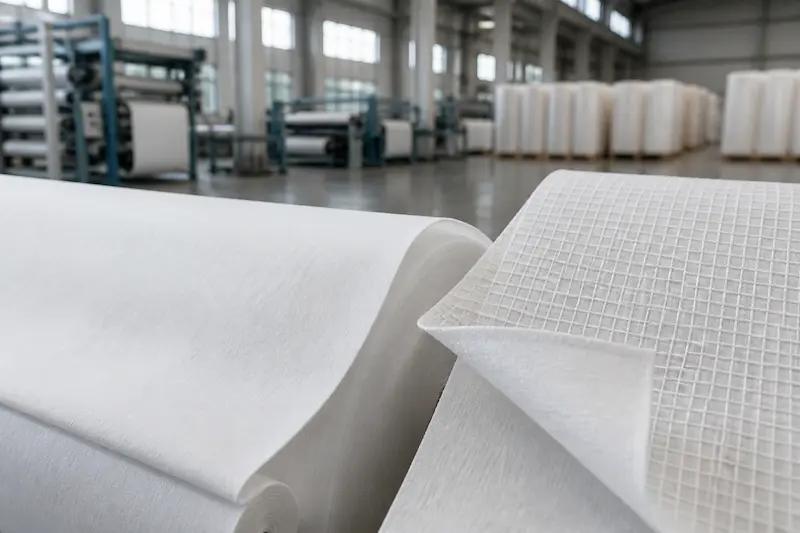
A standard spunbond polyester mat is built from randomly laid, thermally bonded polyester filaments. It offers a balanced combination of tensile strength, elongation and bitumen wet-out — good enough for the majority of SBS and APP membranes.
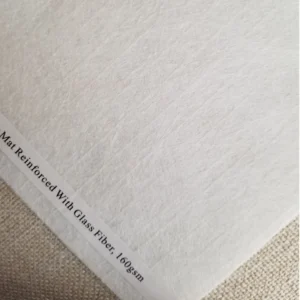
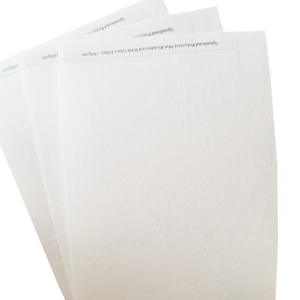
A reinforced spunbond polyester mat adds an extra layer to that construction: an embedded scrim or grid (often glass fibre or high-tenacity polyester yarn) that is bonded into the web during production. Consequently, the reinforced grade delivers:
- Higher tensile strength in both machine and cross directions.
- Lower elongation, so the sheet resists stretching under load.
- Better dimensional stability during coating and on the roof.
- Improved puncture and tear resistance in the finished membrane.
In other words, the reinforcement does not replace the nonwoven — it upgrades it, so the mat behaves more like a composite. You can compare both grades directly on the polyester mat product category page.
Where the Extra Cost Pays Back
The premium for a reinforced spunbond polyester mat is justified in a clear set of applications:
- Mechanically fastened roofs. In fastened systems, the membrane is held by fasteners and plates, and every wind event pulls directly on the sheet. Wind-uplift resistance is typically validated to standards such as ANSI FM 4474, and a stronger base fabric is the cheapest way to lift that rating. Here the reinforced mat does not cost money — it earns money.
- Large-span and high-wind projects. Stadiums, warehouses and industrial halls see concentrated wind loads. When the membrane is spec’d for high wind classes, a standard mat simply will not pass.
- High foot-traffic and maintenance decks. Heavier reinforcement resists punctures from ladders, equipment and maintenance traffic, reducing callbacks.
- Thicker, premium membrane build-ups. When you sell a premium SBS system with 4–5 mm thickness, buyers expect a stronger carcass inside — the reinforced mat supports that positioning.
For example, a membrane made on a reinforced spunbond polyester mat can often be submitted for a higher wind classification with no other recipe change, which directly increases its sales value.
Where Standard Mat Is Still the Right Call
On the other hand, there are plenty of situations where the standard grade remains the smarter choice:
- Fully adhered systems in moderate climates. When the membrane is glued down across its full area, the wind load on the sheet itself drops dramatically, and the standard mat provides more than enough strength.
- Economy and commodity membranes. In price-led markets, the standard grade keeps the cost per square metre competitive.
- Self-adhesive underlayments. These sheets are usually low-load by design, so reinforcement adds cost without adding measurable benefit.
In practice, most plants run both grades: standard mat for the commodity line and reinforced mat for the premium line. This lets you segment the market instead of competing on price alone.
The Cost-Performance Math
Let us put numbers on it. Suppose a standard mat saves you roughly 0.05–0.10persquaremetreofmembranecomparedwiththereinforcedgrade.Onaproductionlinemaking5millionm2peryear,thatsavinglookslike0.05–0.10persquaremetreofmembranecomparedwiththereinforcedgrade.Onaproductionlinemaking5millionm2peryear,thatsavinglookslike250,000–500,000 annually — a tempting figure.
However, look at the other side of the ledger:
- A single failed roof warranty claim on a large project can cost more than a year of that saving.
- A higher wind rating can raise the membrane’s selling price by several times the material saving.
- Rejections during wind-uplift testing cost time and money on every project.
As a result, the reinforced grade is not an expense in these applications — it is insurance with a positive return. The decision, therefore, comes down to one question: does your target market stress the membrane in tension? If yes, the reinforced spunbond polyester mat pays back; if no, standard is fine.
How to Verify the Reinforcement Quality
Not all reinforced mats are equal, so verify before you buy:
- Ask for tensile strength in both MD and CD, tested to ISO 9073-3, and confirm the improvement over the standard grade in writing.
- Check the finished membrane against ASTM D5147 test methods, so you know how the reinforcement behaves inside the sheet.
- Inspect the scrim placement: an off-centre or wavy grid creates weak bands — one of the classic polyester mat defects that shows up only on the line.
- Finally, ask the supplier how they hold consistency from roll to roll; our own answer is documented in How Guanlong Controls Quality from Raw Fiber to Finished Roll.
A Simple Decision Checklist
| Your situation | Recommended grade |
|---|---|
| Mechanically fastened or high-wind project | Reinforced spunbond polyester mat |
| Fully adhered system, moderate climate | Standard spunbond polyester mat |
| Premium 4–5 mm SBS build-up | Reinforced grade |
| Commodity / economy membrane | Standard grade |
| Heavy maintenance traffic on the roof | Reinforced grade |
Still unsure? Our earlier comparison, Compound Base Mat vs. Polyester Mat: Which Carrier Fabric Is Right for Your Bitumen Membrane?, covers the broader family decision, and the Guanlong sales team can send samples of both grades with test data, so you can run your own line trial and let the numbers decide.