Every supplier claims to sell quality. Few can show you the system behind the claim. For a waterproofing membrane base mat supplier, quality control means more than inspecting the final roll — it means controlling every stage from the first fiber to the last winding, because a defect caught late costs ten times more than a defect prevented early. Weifang Guanlong Waterproof Material Co., Ltd. has built exactly that kind of system since 2005. This article walks through how the company controls quality from raw fiber to finished roll, and what that discipline means for membrane producers who buy its polyester mat, compound base mat, and fiberglass mesh.
The Quality Chain: Why Control Starts Before Production
Quality does not begin at the inspection table; it begins with the material entering the factory. The fibers that form a spunbond polyester mat carry all its future properties. If the incoming fiber varies in strength, cleanliness, or moisture, no downstream process can fully correct it. Consequently, Guanlong applies the same discipline to raw material intake as it does to finished product release.
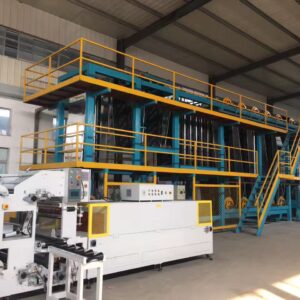
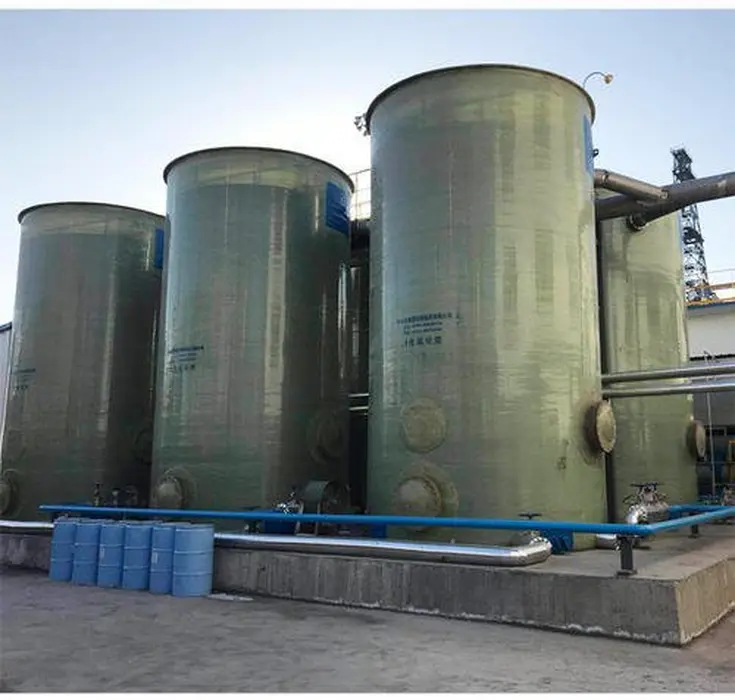
The company also builds quality into its equipment. Its production halls run internationally leading production lines with precision testing instruments, which means operators measure the process continuously rather than guessing at the outcome. The production process itself — from PET fiber through forming and bonding — explains why equipment control translates directly into fabric consistency.
Stage 1: Raw Fiber and Material Checks
Every production run starts with verified input. Guanlong selects raw materials against fixed specifications and checks each incoming batch before it enters the line.
Fiber quality. The base polymer and fiber denier determine tensile strength and elongation in the finished mat. Consistent fiber means consistent strength, roll after roll.
Cleanliness. Contaminants and oil residues create the spots and weak points that ruin membranes. Incoming checks reject contaminated material before it reaches the web former.
Moisture content. Excess moisture disrupts thermal bonding and creates soft spots. Operators monitor moisture and adjust processing conditions accordingly.
Batch traceability. Each raw material batch carries records, so if a quality issue ever appears downstream, the team can trace it back to its source and correct the root cause.
In short, raw material control prevents the most common polyester mat defects — weight drift, contamination, and soft spots — before they can form.
Stage 2: In-Process Control on the Production Line
Once the fiber feeds into the line, quality control becomes a real-time activity. Operators and instruments watch the web at every critical point:
Web formation. Carding and air-layering settings determine fiber distribution. Consistent settings produce uniform weight; drift produces streaks and thin areas.
Thermal bonding. Temperature and pressure control the bond between filaments. Too hot, and the mat stiffens; too cool, and it stays fuzzy and weak. Instruments hold these parameters within tight ranges.
Weight monitoring. Online scales track gram weight continuously. When weight drifts, operators correct the feed rate immediately, keeping the mat inside its specification.
Width and tension. Web tracking and winding tension receive constant attention, because uneven tension causes warping and edge damage later.
For compound base mat, the same discipline extends to the compounding stage, where fiberglass mesh joins the nonwoven web, and to the supporting equipment — including the compound base mat production lines and fiber processing machines the company builds and operates. The principle holds across every product: measure, correct, and record.
Stage 3: Precision Testing in the Laboratory
Between production and release, samples go to the testing laboratory, where precision instruments verify the properties that membranes depend on:
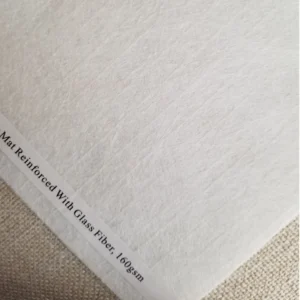
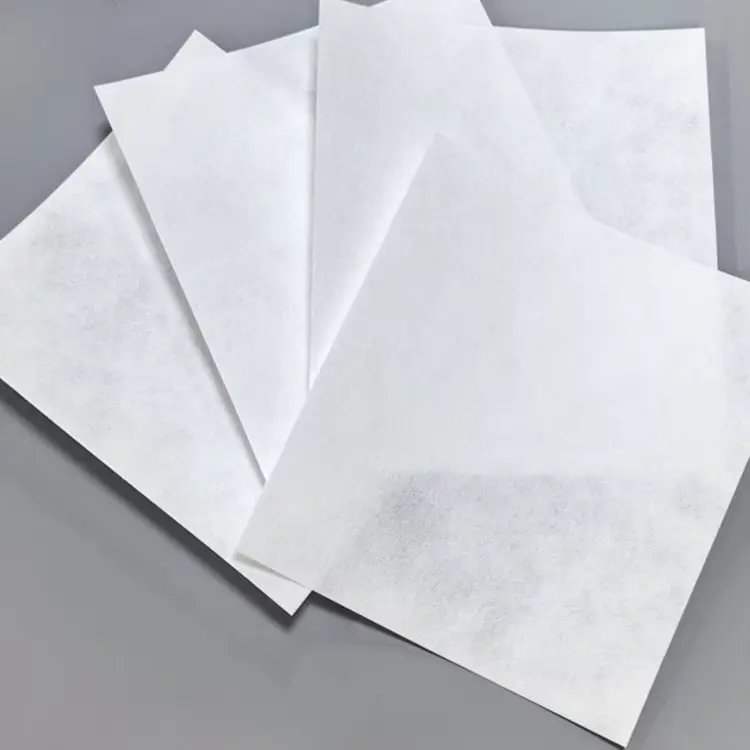
Gram weight. Operators cut and weigh samples to confirm the basis weight matches the specification, such as the stated 140 g/m² for the spunbond polyester mat.
Tensile strength (MD/CD). Testing machines pull samples in both machine and cross directions. The results verify values like ≥230/200 N/5cm for the 140g grade and ≥450/400 N/5cm for the 4×4 compound base mat.
Elongation at break. Samples stretch until failure, confirming flexibility — the 140g grade must reach at least 18%.
Heat resistance. Samples endure high temperatures to confirm ratings above 150°C, which guarantees the mat survives hot bitumen coating without shrinking or melting.
Bitumen absorption and uniformity. Visual and physical checks confirm the surface accepts coating evenly.
These numbers appear on every datasheet, and they come from real measurement. Our guide to testing polyester mat quality explains the same methods so buyers can verify them independently, while our article on how mat strength translates into membrane performance shows why these values predict real-world durability.
Stage 4: Final Inspection and Roll Preparation
A roll only leaves the factory after final checks confirm what the line and laboratory reported:
Visual inspection. Trained inspectors examine the full surface for streaks, spots, fuzz, and edge damage — the defects that laboratory samples can miss between tested points.
Batch sampling. Each production batch supplies samples for confirmation testing, so release decisions rest on data, not assumptions.
Roll condition. Inspectors verify wound tension, roll edges, and core quality, because handling damage at this stage wastes otherwise good material.
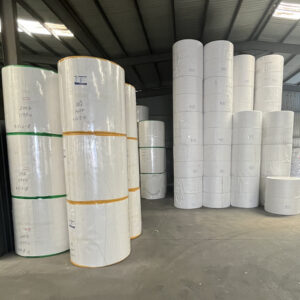
Packaging protection. Rolls receive packaging that guards against moisture and transport damage, protecting the product until it reaches your warehouse. After all, quality control does not end at the factory gate; it ends when the roll performs on your coating line.
The People and Systems Behind the Numbers
Equipment alone never guarantees quality; people run the systems, and systems keep people consistent. Guanlong employs experienced quality control personnel who inspect every stage from raw materials to finished products, and its R&D team continuously upgrades products to adapt to market needs. Nearly twenty years of production experience shows in the documented procedures and the trained judgment of the team.
Formalized quality management matters in this industry, and international frameworks such as ISO 9000 define what disciplined quality systems look like. Regardless of certification details, the principles apply: customer focus, process approach, and evidence-based decision making. Guanlong’s customers across Asia, the Middle East, and Europe rely on those principles in every shipment.
What This Means for Membrane Producers
A supplier’s quality control system changes your production economics. Consistent rolls run through your coating line without surprises: stable weight means stable bitumen consumption, uniform surface means even coating, and reliable tensile means fewer field failures. In contrast, inconsistent suppliers force you into extra inspection, higher scrap, and warranty risk — costs that never appear on the invoice.
When you evaluate a base mat supplier, ask about their quality control in detail: What raw material checks do they run? How do they monitor weight and bonding online? Which tests appear on the certificate of analysis? How do they handle defects? Our gram weight guide and defect-awareness articles give you the technical vocabulary for that conversation.
Guanlong customizes weight, width, and roll length to match each customer’s line and provides technical guidance on material selection. To discuss specifications, request samples, or audit the company’s quality procedures, contact the Guanlong team — or start with the company profile to understand its history and capabilities.
Frequently Asked Questions
1. How does Guanlong ensure consistent quality?
Guanlong operates a staged quality control system: raw material checks, real-time in-process monitoring, laboratory testing with precision instruments, and final visual inspection before release.
2. What raw materials does Guanlong use?
The company sources base polymers and fibers against fixed specifications and checks each incoming batch for quality, cleanliness, and moisture before production.
3. What testing does Guanlong perform on finished rolls?
Laboratory tests cover gram weight, tensile strength in machine and cross directions, elongation at break, heat resistance, and surface uniformity.
4. How does Guanlong control quality during production?
Operators and instruments monitor web formation, thermal bonding, gram weight, width, and winding tension continuously, correcting drift as it happens.
5. Can I visit the factory or audit quality procedures?
Guanlong welcomes technical discussions with serious buyers; contact the team to arrange specifications review, sample testing, or a quality system audit.
6. What tolerances can I expect?
Tolerances depend on the product and specification agreed with the customer. Guanlong customizes basis weight, width, and roll length, and confirms compliance through batch testing and certificates.
Conclusion
Quality control from raw fiber to finished roll turns a material supplier into a production partner. Guanlong applies checks at every stage — incoming fiber, in-line process control, laboratory precision testing, and final inspection — so each roll of polyester mat, compound base mat, or fiberglass mesh arrives ready for your line. When you choose a supplier, choose the system, not just the price. Ask the hard questions, verify with samples, and work with a team that measures what it promises.