Thirty years ago, most waterproofing membranes started life as cotton rags. Producers shredded textile waste, carded the fibers into a loose felt, and saturated that felt with bitumen. The result worked — until moisture, heat and uneven quality exposed the limits of natural fiber. Today, a growing number of membrane manufacturers around the world make the same decision: they switch their carrier from cotton mat to polyester mat. This article explains why, and what the change means for product performance, production stability and cost per square meter.
A Short History of Carrier Fabrics
Carrier fabric history offers a useful lesson in materials engineering. Early built-up roofing relied on organic felt — rag, cotton or jute — because those fibers were cheap and available everywhere. Asphalt roll roofing and built-up roofs both used organic felt bases in their early decades, as the Wikipedia history of asphalt roll roofing describes. Those systems performed acceptably, yet organic felt brought two persistent problems: it absorbs moisture, and it deteriorates over time. Synthetic carriers changed the equation. Fiberglass arrived first, and polyester followed as manufacturers demanded more elongation and puncture resistance. Meanwhile, the Wikipedia overview of cotton fiber confirms the natural material’s water-absorbent character, which lies at the root of organic felt failures.
Difference 1: Moisture and Rot Resistance
Cotton is hydrophilic: it holds water, and wet natural fiber attracts mold and bacteria. Polyester, by contrast, repels moisture and does not rot. For a membrane installed in a roof assembly or a basement wall, that difference can mean decades of extra service life. Therefore, durability-focused producers treat this single property as the deciding factor.
Difference 2: Tensile Strength and Elongation
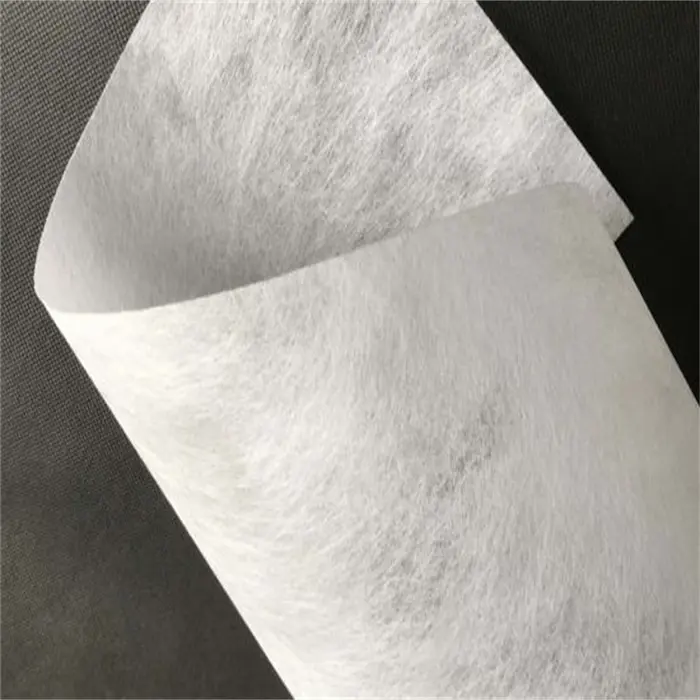
A typical spunbond polyester mat reaches a tensile strength of ≥230/200 N/5cm (MD/CD) with elongation above 13 percent, depending on gram weight. Cotton felt rarely matches those numbers, and its elongation drops quickly as the fiber ages. Membrane producers need both values: strength to resist installation stresses, and elongation to follow building movement. Our article on how polyester mat strength translates into tensile, elongation and puncture performance explains this relationship in detail.
Difference 3: Heat Stability on the Coating Line
Polyester mat withstands temperatures of at least 150°C, so it passes through SBS or APP coating lines without shrinking or embrittling. Cotton fiber degrades under repeated high-temperature exposure, which slows line speed and raises scrap rates. As a result, switching to polyester often improves production efficiency immediately — before any finished roll leaves the plant.
Difference 4: Consistency and Supply Security
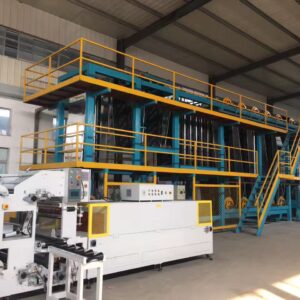
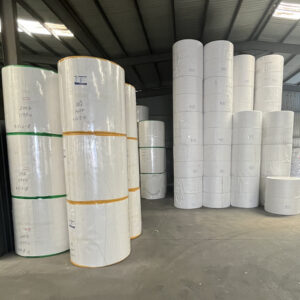
Natural cotton depends on harvests, seasons and textile recyclers, so fiber quality and price fluctuate. Polyester mat starts from industrial PET chips, and a factory like Guanlong controls the whole process from polymer to finished roll. Consequently, batch-to-batch variation shrinks, and buyers can quote their customers with confidence. For more on how the manufacturing process guarantees consistency, read our guide to spunbond vs. reinforced spunbond polyester mat.
Difference 5: Bitumen Absorption and Adhesion
The open, thermally bonded structure of a spunbond polyester mat absorbs bitumen evenly and locks the coating to the carrier. This bond quality directly affects delamination resistance, one of the most common membrane failure modes. In contrast, the dense, irregular surface of cotton felt creates weak bonding spots and uneven saturation. The same web-formation principles apply across all nonwoven materials, as the Wikipedia overview of nonwoven fabrics explains.
What the Switch Costs — and Saves
Cost comparison deserves care. Cotton mat often costs less per kilogram, but membrane economics run on cost per square meter of finished product. Consider scrap on the line, slower coating speeds, lower elongation at low temperatures, and warranty claims years later. A small price advantage at the raw material stage rarely survives contact with the production line. Our gram weight guide for 120g, 140g and 160g polyester mat shows how spec choice changes cost and performance at the same time.
When Cotton Mat Still Makes Sense
Polyester mat does not eliminate cotton felt everywhere. For short-life, low-specification products in price-sensitive markets, some producers still use organic or blended felts to reach a target cost. Yet the trend points one way: as warranty periods extend and building codes tighten, carriers that rot in service become harder to justify. For those producers, polyester remains the safer long-term position.
How to Make the Switch
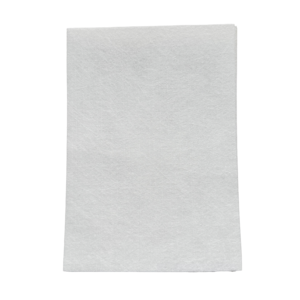
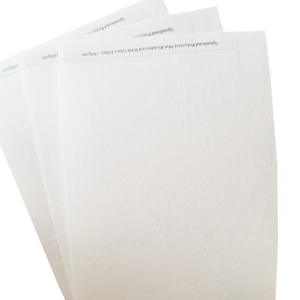
Moving from cotton to polyester mat does not require a new plant. Most membrane lines accept polyester carrier directly, and the switch mainly involves updating specifications, adjusting coating parameters, and running trial rolls. Start with samples and test reports: check gram weight, tensile strength (MD/CD), elongation, heat resistance and bitumen absorption. Guanlong supplies spunbond polyester mat from 120g to 160g, plus reinforced versions, with customized width from 1.0 to 1.2 meters. Whatever carrier you run today, a side-by-side trial with polyester mat costs little and answers most questions. Contact our team for samples, test reports and a quotation, and we will help you evaluate the switch on your own line.
FAQ
Q1: Why do membrane producers switch from cotton mat to polyester mat?
Cotton mat absorbs moisture, rots over time, and offers limited elongation. Polyester mat provides higher tensile strength, better heat stability and long-term durability, which reduces warranty risk for the membrane producer.
Q2: Is polyester mat more expensive than cotton mat?
Usually polyester mat costs more per kilogram, but the comparison should use cost per square meter of finished membrane. Lower scrap, faster line speeds and fewer claims often offset the raw material premium.
Q3: Can my existing membrane line run polyester mat?
In most cases yes. Modified bitumen lines accept polyester carrier with minor parameter adjustments, and a trial roll verifies compatibility before full production.
Q4: Which gram weight of polyester mat should I choose when switching?
Start from the membrane type and target performance: 120g suits economical products, 140g covers standard applications, and 160g or reinforced versions handle demanding projects. Review the application requirements, or ask the supplier for material selection guidance.
Q5: How do I verify polyester mat quality before ordering?
Request test reports covering gram weight, tensile strength (MD/CD), elongation, heat resistance and bitumen absorption, then run a sample trial on your line.