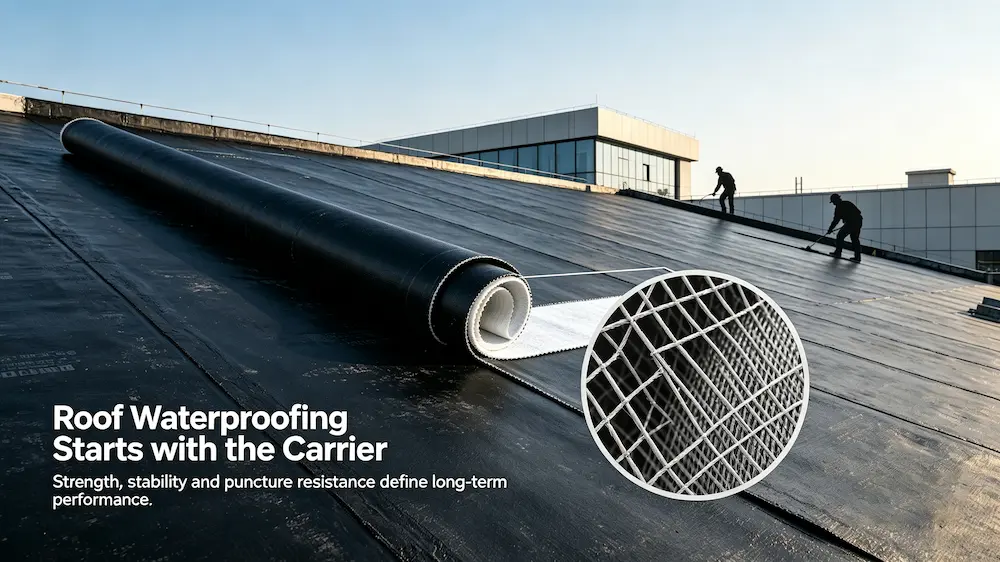
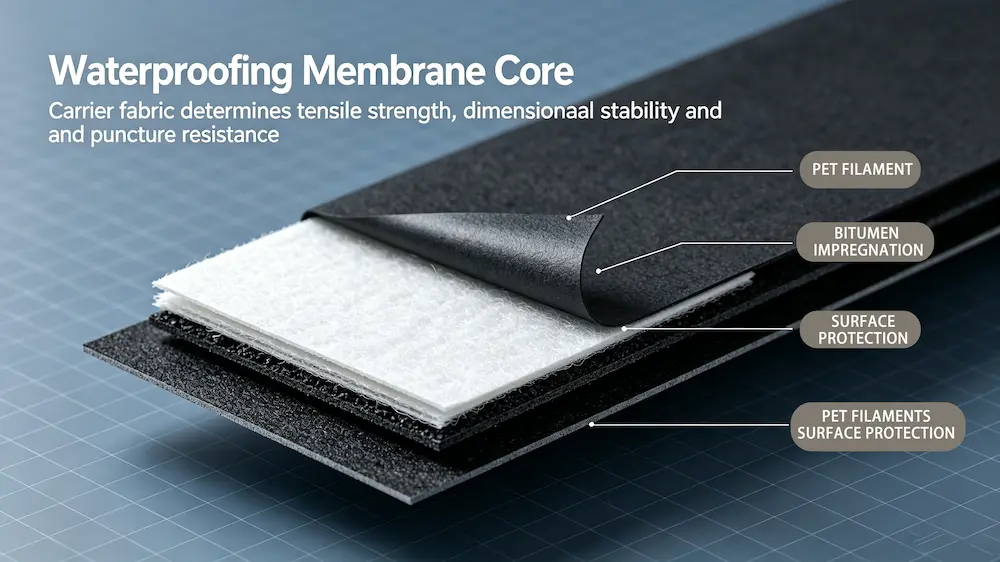
Every waterproofing membrane starts with a decision most buyers never see: which carrier fabric sits at its core. The carrier delivers the tensile strength, dimensional stability, and puncture resistance that keep SBS and APP membranes intact for decades. Two options dominate the market: spunbond polyester mat and reinforced spunbond polyester mat. They share the same PET filament family, yet they behave very differently on the production line and on the roof. In this guide, we compare both fabrics across structure, strength, speed, and cost, so you can order the right carrier the first time.
What Is Spunbond Polyester Mat?
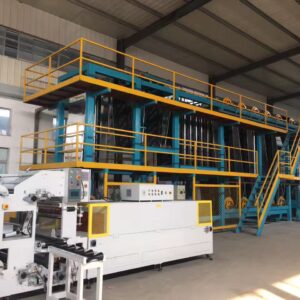
Manufacturers produce spunbond polyester mat through the spunbond process, which extrudes continuous PET filaments and lays them into a uniform web. Needle punching or thermal bonding then locks the filaments together. As EDANA explains, this technology creates engineered fabrics with consistent coverage and predictable mechanical properties.
Standard spunbond mat offers three advantages that make it a global workhorse:
- High elongation. The continuous filaments stretch under stress instead of snapping, which helps the membrane bridge small substrate cracks.
- Uniform surface. A smooth, even web improves bitumen saturation and adhesion during lamination.
- Cost efficiency. With no extra reinforcement layer, production cost stays low.
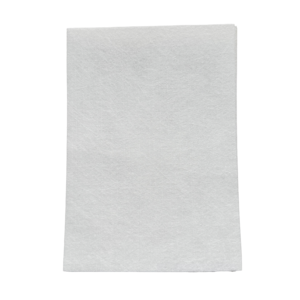
Guanlong supplies spunbond polyester mat from 120g to 200g per square meter. For example, our 140g Spunbond Polyester Mat and 160g Spunbond Polyester Mat serve standard roofing and underlayment systems worldwide.
What Makes Reinforced Spunbond Polyester Mat Different?
Reinforced spunbond polyester mat adds one critical element: longitudinal fiberglass strands. The production process places fiberglass between two layers of fiber mesh, then needle-punches the composite into a single fabric. As a result, the mat gains the strength of glass fiber while keeping the flexibility of polyester.
This structure changes performance in three measurable ways:
- Higher tensile strength. Fiberglass contributes stiffness, so the fabric carries heavier loads without stretching out of shape.
- Better thermal dimensional stability. The mat holds its dimensions at the high temperatures of bitumen coating and lamination, preventing distortion during membrane production.
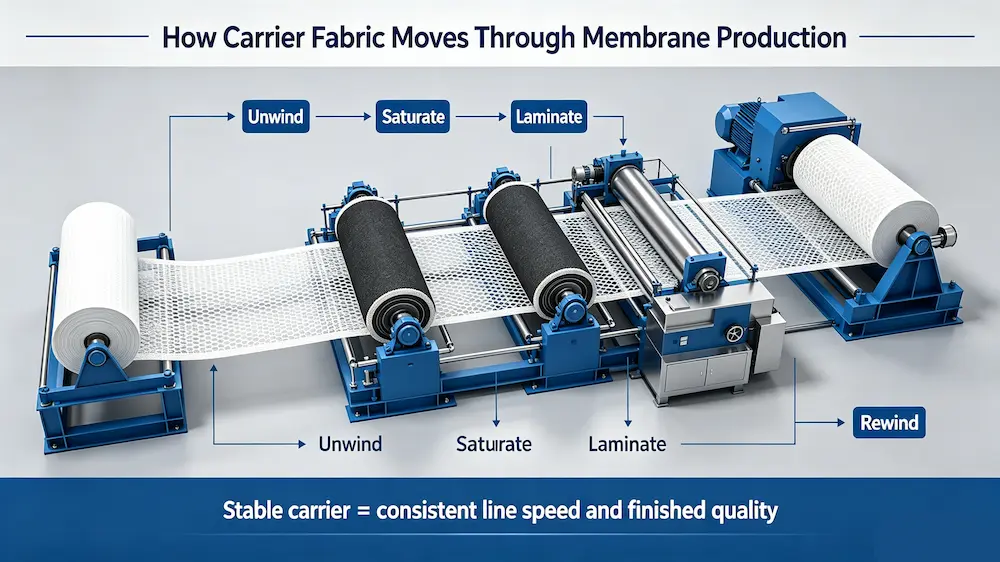
- Faster line speeds. Because the fabric resists deformation under tension, manufacturers can run membrane production lines at higher speeds without sacrificing quality.
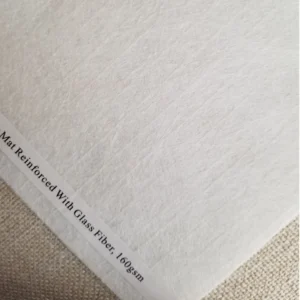
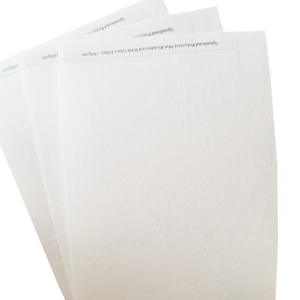
Our 140g Reinforced Spunbond Polyester Mat demonstrates these properties clearly:
The reinforced range extends from 120g to 250g, including the 120g Reinforced Spunbond Polyester Mat, 160g Reinforced Spunbond Polyester Mat, and 250g Reinforced Spunbond Polyester Mat.
Spunbond vs. Reinforced at a Glance
When Standard Spunbond Polyester Mat Wins
Choose standard spunbond polyester mat when your priorities are cost and flexibility. This fabric suits:
- Standard SBS membranes for residential and light commercial roofing.
- Projects that need maximum elongation to tolerate structural movement.
- Price-sensitive markets where the membrane competes mainly on cost per square meter.
Moreover, standard spunbond delivers a smooth surface that saturates evenly with bitumen, which keeps lamination quality high. For these applications, the Polyester Mat product category lists all available gram weights and grades.
When Reinforced Spunbond Polyester Mat Wins
Choose reinforced spunbond polyester mat when production speed and dimensional stability matter more than the small price difference. This fabric performs best for:
- High-speed membrane production lines, where the carrier must resist stretching under tension.
- APP and SBS membranes exposed to large temperature swings, because the fiberglass core prevents shrinkage and expansion.
- Heavy-duty roofing, bridge, and infrastructure projects that demand certified mechanical performance.
In addition, reinforced mat maintains its properties across the wide processing temperatures of modern “green bitumen” lines. For a deeper look at how fiber structure drives sustainability and longevity, read our guide on why long-fiber polyester mat leads sustainable construction.
Four Questions That Settle the Choice
Ask yourself these four questions before placing an order:
- What membrane system do you run? APP membranes with hot application generally benefit more from the thermal stability of reinforced mat.
- What line speed must the carrier support? If you push for high output, the reinforced version lets you accelerate without defects.
- What stress will the membrane face? Roofs with high foot traffic, thermal cycling, or structural movement favor reinforced carriers.
- What is your cost target per square meter? Standard spunbond wins on price; reinforced wins on performance per gram.
Notably, international standards define how manufacturers verify these properties. EN 13707:2013 covers reinforced bitumen sheets for roof waterproofing, while ASTM D5147 details sampling and testing of modified bituminous sheet materials. Ask your supplier for test reports that follow these frameworks.
How to Verify Quality Before You Order
A specification sheet only tells part of the story. Before you commit, confirm three things:
- Gram weight consistency. Weigh samples from different rolls to confirm the GSM matches the label.
- Tensile test certificates. Request MD/CD values and compare them against the stated specs.
- Batch traceability. A reliable supplier keeps production records for every batch.
Guanlong has manufactured waterproofing base materials since 2005 and customizes gram weights from 120g to 260g to match your production targets. See how we customize base mat lines for 120g to 260g specs to understand our flexibility.
FAQ
Is reinforced spunbond polyester mat stronger than standard spunbond?
Yes. The longitudinal fiberglass core raises tensile strength and thermal dimensional stability. At the same basis weight, reinforced spunbond polyester mat typically delivers MD tensile of ≥ 260 N/5cm, compared with lower values for standard spunbond.
Can reinforced spunbond polyester mat run on high-speed production lines?
Yes. The fiberglass reinforcement resists deformation under tension, which lets membrane lines run faster while keeping consistent quality. Many international membrane makers choose reinforced spunbond polyester mat specifically for high-output production.
What gram weights does Guanlong offer?
Guanlong supplies spunbond polyester mat from 120g to 200g and reinforced spunbond polyester mat from 120g to 250g, with custom weights available from 120g to 260g.
Does the fiberglass core make reinforced mat less flexible?
Not significantly. Needle punching bonds the fiberglass strands into the polyester web, so the composite keeps good elongation (≥ 15%) and remains easy to roll, cut, and laminate.
How do I request samples or a quote?
Contact our team through the contact page with your target gram weight, width, and roll length. We reply with specifications and sample arrangements.
Conclusion: Choose the Carrier That Matches Your Line and Market
The right carrier fabric depends on your production line, your target market, and the stresses your membrane will face. Standard spunbond polyester mat delivers economy and flexibility; reinforced spunbond polyester mat delivers strength, thermal stability, and speed. Neither option is universally better — the correct choice matches your specific process and project demands.
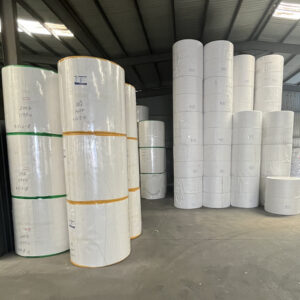
At Guanlong Waterproof, we produce both fabrics on advanced lines with strict quality control, backed by nearly 20 years of waterproofing expertise. Browse the full polyester mat range or contact us to discuss your requirements.