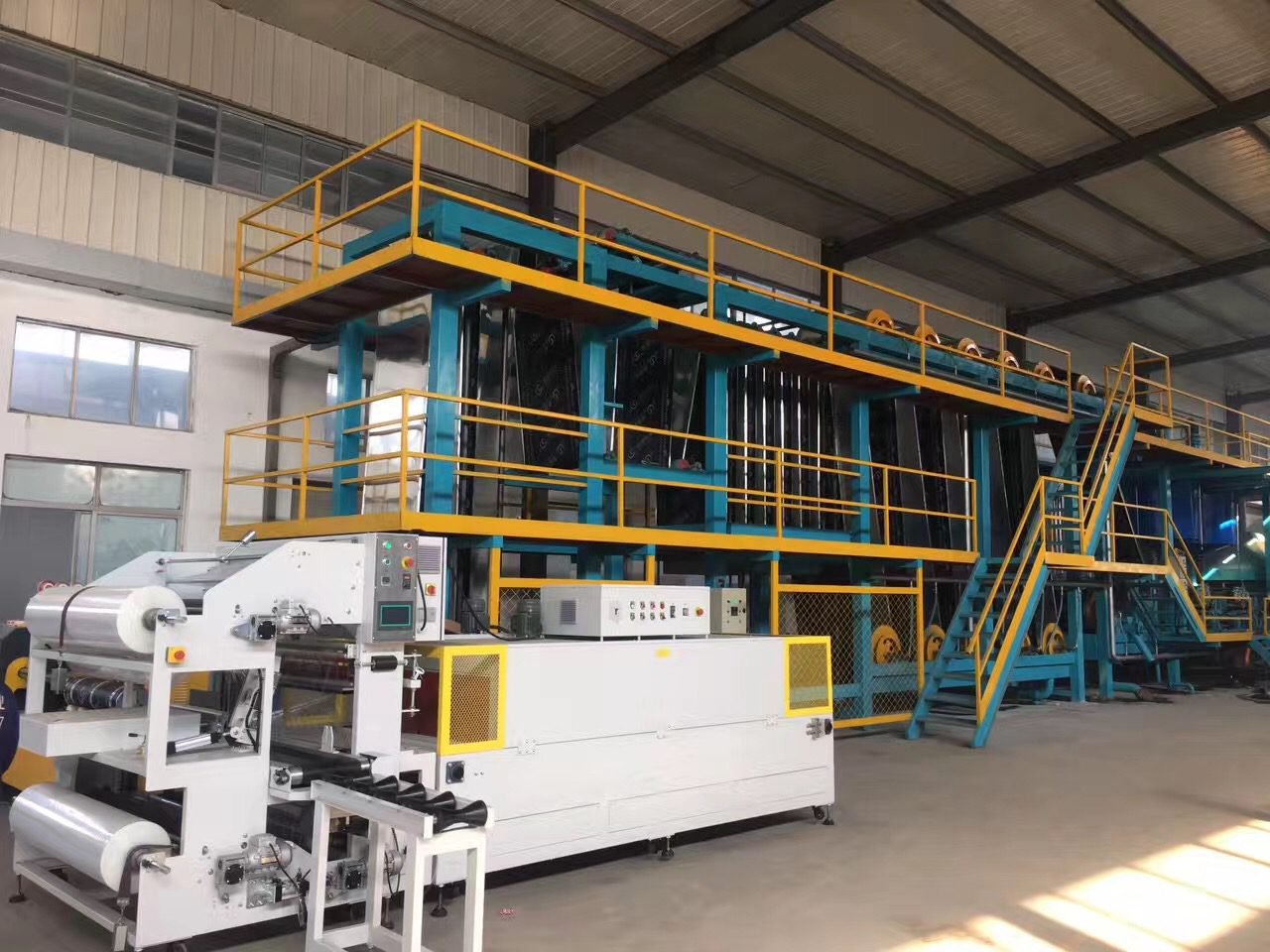
In the competitive world of waterproofing, the ability to pivot production to meet specific project requirements is a significant competitive advantage. While many manufacturers stick to “standard” specifications, niche markets—ranging from lightweight residential underlayments to heavy-duty industrial infrastructure—require precision-engineered base mats.
The question for many factory owners is: How can one production line efficiently switch between a lightweight 120g mat and a high-density 260g reinforced mat? The secret lies in the calibration of key production parameters.
1. Precision Fiber Feeding and Dosing (The GSM Foundation)
The weight of your base mat (measured in Grams per Square Meter or GSM) is determined at the very beginning of the line.
-
For 120g Mats: Use high-speed, high-precision weighing hoppers to achieve a consistent, thin layer. Feed the fiber lightly but perfectly uniformly to avoid “holing” or thin spots.
-
For 260g Mats: Increase the raw fiber feeding speed while maintaining a slower belt speed to reach this density. Rely on advanced PLC systems to synchronize the fiber volume with the line speed, ensuring exact weight accuracy.
2. Needle-Punching Depth and Frequency
Compound base mats usually consist of a polyester fiber layer integrated with a fiberglass mesh (Leno mesh). The “locking” of these layers depends on the needle-punching process.
-
Lightweight Adjustment: When producing 120g mats, set the needle depth shallower and optimize the frequency (strokes per minute) for speed. Avoid over-punching light mats, as this actually weakens the fibers.
-
Heavy-Duty Adjustment: For a 260g mat, drive the needles deeper to ensure the dense fiber mass fully entangles with the reinforcement mesh. This process creates the “high-tensile” skeleton required for heavy-duty SBS or APP membranes.
3. Calendering and Thermal Bonding Temperatures
After the mat is formed, it often passes through heated rollers (calenders) to set the thickness and surface finish.
- Heat Penetration: A 260g mat is significantly thicker than a 120g mat. Therefore, the temperature of the bonding rollers must be adjusted (or the contact time increased) to ensure heat penetrates to the core of the mat. Without this adjustment, the center of a heavy mat may remain “loose,” leading to delamination when it later hits the hot bitumen bath.
- Pressure Calibration: 120g mats require delicate pressure to maintain flexibility, while 260g mats often require higher nip pressure to achieve a specific thickness tolerance for high-speed coating lines.

4. Tension Control and Winding
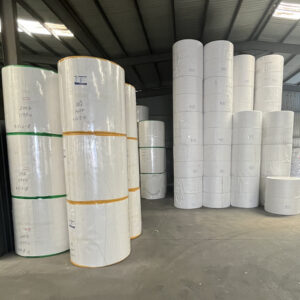
The physical mass of a 260g roll is more than double that of a 120g roll.
- Torque Management: As the roll diameter grows, the winding motor must adjust its torque to prevent “stretching” the mat. Because 120g mats have higher elongation but lower absolute strength, they are more susceptible to deformation if the winding tension is too high.
- Synchronized Speed: Using frequency-converters to synchronize the carding, punching, and winding sections allows for seamless transitions between these drastically different product weights.
Conclusion: Versatility is the Key to Profitability
Customizing your production line for niche markets doesn’t require a different machine for every weight—it requires a smart machine. By mastering the adjustment of feeding speeds, needle depths, and thermal settings, you can serve the budget-conscious residential market and the high-spec government infrastructure market with the same equipment.
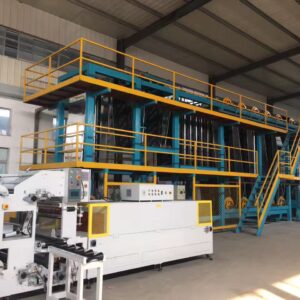
At Guanlong Waterproof, our Compound Base Mat Production Lines are designed with this versatility in mind. Equipped with state-of-the-art control systems, our machinery allows you to switch between 120g and 260g specifications with minimal downtime and maximum precision.
📞 Phone/WhatsApp: +86 18263668883
🌐 Website: glwaterproof.com/product/
📧 Email: guanlinguoji@126.com