
In modern construction, the durability of the waterproofing system is critical to the long-term protection of buildings and infrastructure. One key component often overlooked is the nonwoven polyester felt, which serves as a reinforcement layer in various waterproofing membranes. But how exactly does this material contribute to extending the lifespan of a waterproofing layer?
1. High Tensile Strength and Dimensional Stability
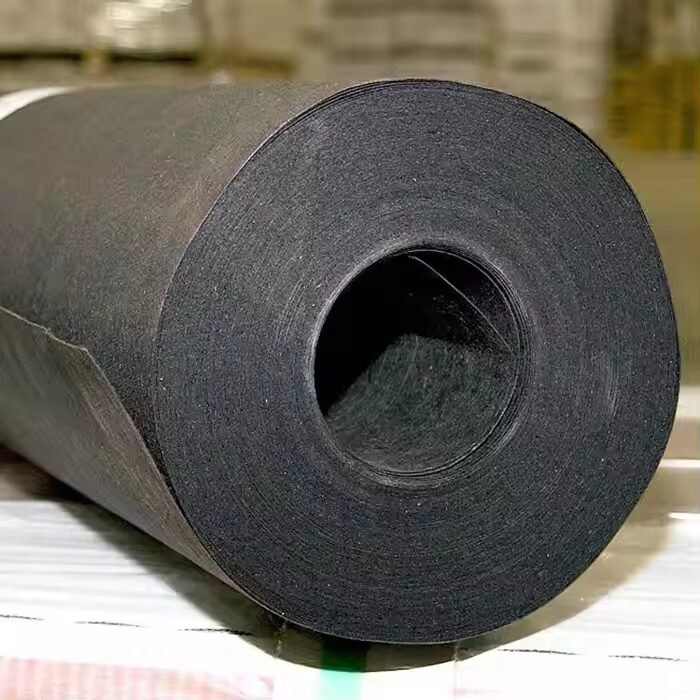
Nonwoven polyester felt is made from polyester fibers that are mechanically bonded through needle-punching or thermal bonding. This gives it excellent tensile strength and elongation properties. As a result, it resists cracking or deformation caused by substrate movement, temperature changes, or installation stress—key factors in premature waterproofing failure.
2. Superior Heat Resistance and Aging Performance
Polyester fibers are known for their ability to withstand high temperatures, making nonwoven polyester felt especially suitable for torch-applied or hot-melt applications. Moreover, the material resists UV degradation and oxidation, providing long-term stability even under harsh outdoor conditions.
3. Excellent Compatibility with Bitumen and Polymers
The fibrous surface of the felt enhances its bonding with modified bitumen or self-adhesive compounds. This improves layer cohesion and reduces the risk of delamination, which is critical for long-term waterproofing performance.
4. Improved Water Resistance and Barrier Function
Although the material itself is not entirely waterproof, its dense fiber structure provides capillary action control, serving as an added layer of resistance to moisture penetration and helping to prevent micro-leaks.
5. Eco-Friendly and Cost-Effective Over Time
Many nonwoven polyester felts are made from recycled polyester and are compatible with green building standards. Their durability also translates to fewer repairs and replacements, reducing maintenance costs across the life of the structure.
Conclusion:
Nonwoven polyester felt does far more than reinforce waterproofing membranes. It actively contributes to mechanical strength, dimensional stability, thermal endurance, and waterproofing performance. As a result, it plays a crucial role in ensuring the long-term reliability of waterproofing systems across a wide range of applications.